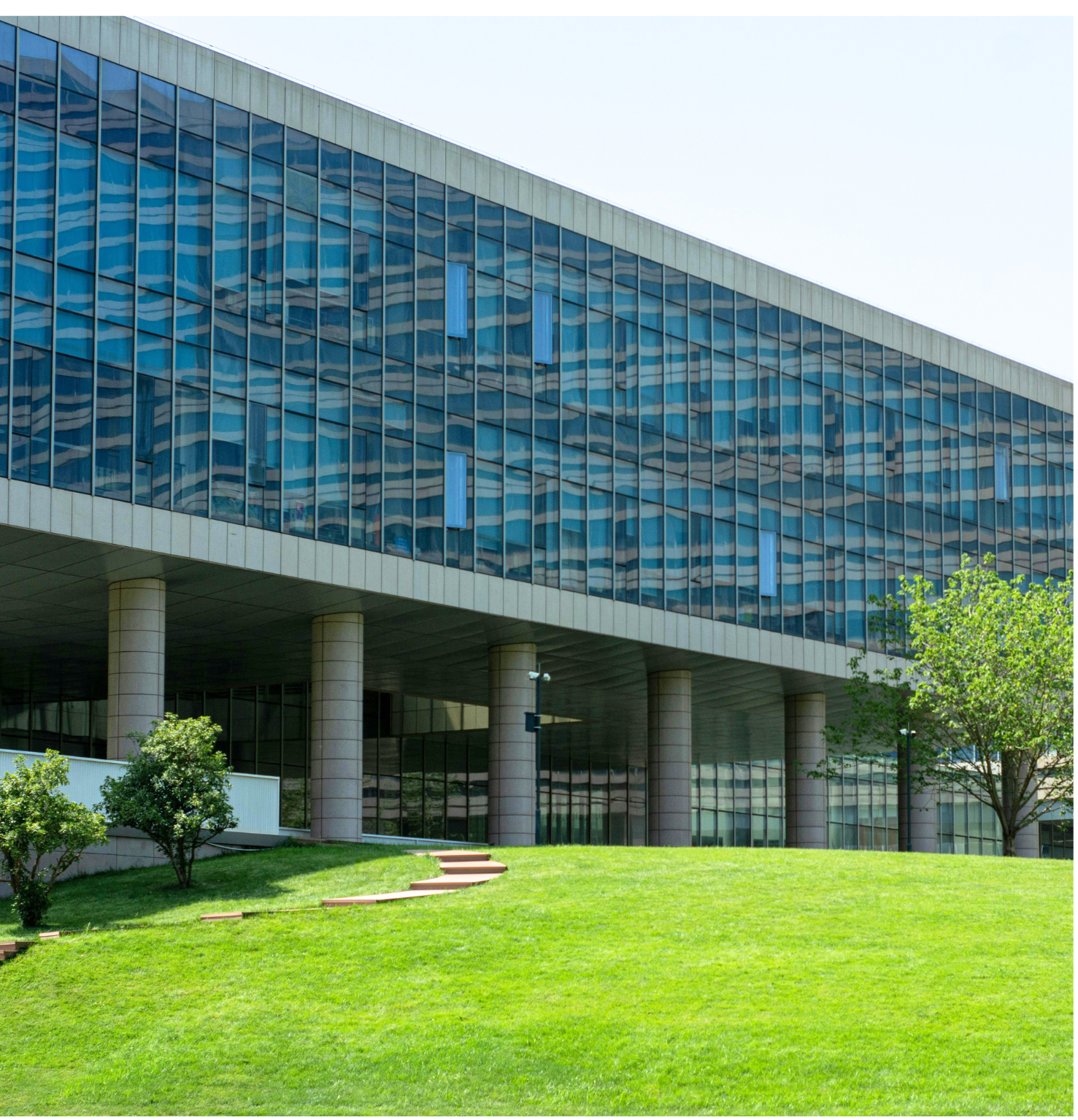
Coming Statewide Changes
Nonfunctional Turf (NFT)
In 2023, California enacted Assembly Bill (AB) 1572 to reduce the wasteful use of potable (drinking) water and support State policies on water conservation and climate change. The law prohibits using potable water to irrigate nonfunctional turf (NFT) on commercial, industrial, and institutional (CII) properties and common landscape areas of Homeowners Associations (HOAs).
The law does not ban turf—it prohibits using potable water on nonfunctional turf. Functional turf may still be irrigated with potable water, and nonfunctional turf may still be irrigated with recycled water.
The new law will be phased in over five years, starting in 2027, based on the type of property. The deadlines below are the compliance dates, which means the applicable property must stop irrigating nonfunctional turf with potable water by that date and may not irrigate with potable water in the future. This is a permanent prohibition.
Who Does This Apply To?
The Statewide regulation applies to the following:
- Commercial properties (offices, retail, restaurants, etc.)
- Industrial properties
- Institutional properties (schools, hospitals, government facilities)
- Common areas of Homeowners Associations (HOAs)
What is Nonfunctional Turf?
Nonfunctional turf is grass that is primarily decorative and not regularly used for recreation or community activities.
Common examples include:
- Grass along sidewalks, buildings, and fences
- Landscaping in parking lots, medians, or entryways
- Decorative lawns at commercial buildings
- Unused grassy areas that are rarely walked on
What is considered functional turf?
Functional turf includes grass that is actively used for:
- Parks, playgrounds, and sports fields
- Schoolyards or gathering areas
- Employee break areas
- Community recreation spaces
Important:
- The regulation does NOT apply to residential lawns.
Implementation Timeline
The law will be phased in over several years:
- January 1, 2027 – Public and government-owned properties
- January 1, 2028 – Commercial, industrial, and institutional properties
- January 1, 2029 – HOA common areas
- January 1, 2031 – Government/public water system properties in disadvantaged communities
What This Means for Sacramento County Customers
Affected customers can begin preparing now by:
- Identifying areas of nonfunctional turf on their property
- Evaluating opportunities for water-efficient landscaping
- Coordinating with landscape managers or property owners
- Exploring available rebate and conservation programs
Benefits of Transitioning Away from Nonfunctional Turf:
- Reduces unnecessary water use
- Helps prepare for drought and water supply uncertainty
- Lowers long-term irrigation costs
- Supports climate-resilient landscapes
- Improves sustainability of local water systems
Frequently Asked Questions (FAQs)
No. The Statewide regulation does not apply to residential properties, and it does not apply to apartment complexes that are not part of an HOA or a common interest development.
If the grass is used for activities like sports, play, or gatherings, it is considered functional turf, and watering it with potable (drinking) water is generally allowed.
Yes, the law allows for the irrigation of trees located in nonfunctional turf with potable water as needed for the health of trees and other perennial non-turf plantings.
Yes. Turf irrigated with recycled or non-potable water is allowed under the regulation.
Yes. Common exemptions include:
- Parks and sports fields
- Cemeteries
- Areas used for recreation or community events
- Turf necessary to support trees or other plantings
The State defines nonfunctional turf, but local agencies (like Sacramento County Water Agency and water suppliers) will interpret and implement the requirements locally.
Property owners subject to the AB 1572 nonfunctional turf prohibition are not required to replace their nonfunctional turf with a water-wise landscape. The requirement is to stop using potable water to irrigate nonfunctional turf by the applicable compliance date. Therefore, a property owner may choose to stop irrigating the turf and allow it to become dormant or die rather than replace it.
However, property owners should check whether other requirements apply to their property. For example, homeowners' association rules, CC&Rs, local ordinances, lease requirements, or other property-maintenance requirements may address landscaping or the condition of landscaped areas.
SCWA encourages property owners to consider replacing nonfunctional turf with water-efficient, climate-appropriate landscaping where feasible. Water-wise landscaping can reduce ongoing water use and landscape maintenance costs while providing an attractive and functional landscape.
Rebates may be available to help offset costs for replacing nonfunctional turf with low-water use landscaping, groundcover, and native plants. Contact your water provider to see if your property is eligible for a rebate. You can look up your water provider at purveyorlookup.saccounty.gov. Customers in the Sacramento County Water Agency service area can visit SacCounty.gov/CashForGrass to apply for a rebate.
Yes. Beginning in 2030, owners of certain properties with more than 5,000 square feet of irrigated area will be required to certify compliance with the nonfunctional turf requirements.
SCWA will provide additional information and guidance about the certification process as the 2030 deadline approaches.
SCWA will begin with an education-first approach to help customers understand and comply with the new requirements. If SCWA identifies a potential violation, we will first focus on notifying the customer and providing information about how to correct the violation, similar to how water-waste violations are addressed.
Continued or repeated noncompliance may result in additional enforcement action or penalties, as authorized by applicable law and SCWA policies.
Customers do not have to replace nonfunctional turf to comply with AB 1572. A property owner may choose to stop irrigating nonfunctional turf with potable water and allow the turf to become dormant or die.
You can start by:
- Reviewing your landscape for decorative grass
- Planning for future conversion projects
- Taking advantage of conservation programs and rebates
Please contact your water provider. You can look up your water provider at purveyorlookup.saccounty.gov. Customers in the Sacramento County Water Agency service area can email NFT@SacCounty.gov or call (916) 875-2800.
Upcoming Webinar:
Be Water Smart NFT Webinar for Businesses, Institutions, and HOAs:
- October 22, 2026 from noon to 1 pm – Register here